Osmia cornuta: Difference between revisions
No edit summary |
No edit summary |
||
| Line 18: | Line 18: | ||
<gallery mode=slideshow> | <gallery mode=slideshow> | ||
Osmia_cornuta_09.jpg | |||
Osmia_cornuta_10.jpg | |||
Osmia_cornuta_11.jpg | |||
Osmia_cornuta_04.jpg | Osmia_cornuta_04.jpg | ||
Osmia_cornuta_03.jpg | Osmia_cornuta_03.jpg | ||
| Line 31: | Line 34: | ||
<gallery> | <gallery> | ||
Osmia_cornuta_09.jpg | |||
Osmia_cornuta_10.jpg | |||
Osmia_cornuta_11.jpg | |||
Osmia_cornuta_04.jpg | Osmia_cornuta_04.jpg | ||
Osmia_cornuta_03.jpg | Osmia_cornuta_03.jpg | ||
Latest revision as of 08:47, 14 March 2026
About

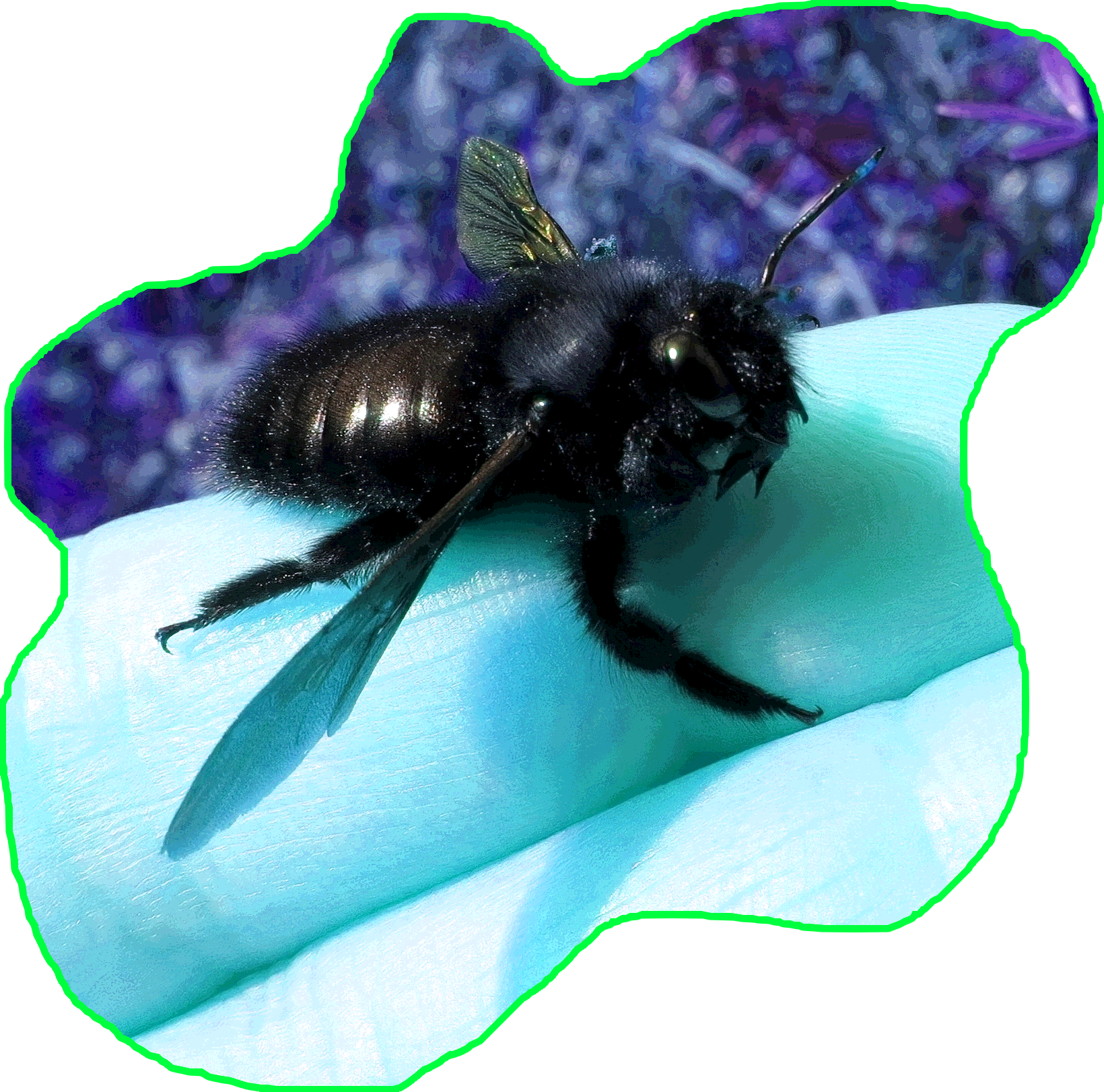
The European Orchard Bee is a common and popular mason bee in Germany and Europe as a whole. About ten years ago, people started building and buying bee hotels en masse and discovered that it is very easy to lure mason bees to any balcony.
While those houses aren't ideal for the bees at all, they still quite often provide an easy way to keep a stable population going in just about every town and city. With the main criticism being, that too many males are born, sicknesses are spread more easy and many bees die because they can't get out after emerging from an egg, because others in line haven't made it, you should, if you want mason bees, check out more professional builds, bigger houses and practise good hygiene.
The European Orchard Bee is a very potent pollinator and uses the pollen of at least 14 native plants to feed on and store food for their offspring. They are solitary bees who need a lot of wild, region appropriate, flowers near their nests.
Sam says
European Orchard Bees have to be the perfect species to get people accommodated to helping, feeding and holding bees. I've had them on my balcony and in my garden for a good 15 years. They battle for the best nesting tube, most attractive female bee and sometimes throw each other into the water I provide to them. While the water dish is only filled for about 5mm of depth and there are stones in there so they can drag themselves out of the water, they sometimes stay helpless and on their backs. A finger offered to them is always used and once they are on my hand, they stay on my hand. Holding them in the bright sunlight and wind for them to dry off, clean themselves and keep going, usually works. Putting them on any flower when they seem frail also works. They will lap up any pollen and nectar if starving.
They seem to pass on the myth of the helpful human on whose balcony they live and seek me out actively. My cat also accepts them as little helpless critters that want to be left alone. Mason bees can technically sting, but they never do. Their affinity to rest on human hands and arms, the fact that they rarely fly near a face to identify a person and their furry butt exterior makes them ideal bees to introduce children to insects, have insect phobic people interact with them and watch bees on your own balcony without destroying populations by introducing honey bees (Apis mellifera). Please don't keep honey bees.